TIFF To JPG Converter
Convert your TIFF images to JPG format with adjustable quality.
Drag & Drop TIFF files here
or
Import a TIFF image directly from a public URL, Google Drive, or Dropbox.
Max file size: 100MB
ℹ️ Adjust quality slider before uploading for custom compression.
Your images are processed securely. No files are uploaded or stored on our servers.
Convert TIFF to JPG online without installing any software. This tool transforms large, professional TIFF (Tagged Image File Format) files into lightweight, universally-supported JPG images that are easy to upload, share, and use on websites, social platforms, and email. Whether you are sending scanned documents, publishing photos online, or shrinking print-ready files for the web, this free converter handles it instantly in your browser.
JPG uses efficient lossy compression to deliver compact files at good visual quality, making it the most widely accepted image format in the world. If you need the reverse direction, use our JPG to TIFF converter. For lossless web delivery instead, try TIFF to WebP, or compress oversized originals first with our TIFF compressor. Simply upload your TIFF, convert it locally, and download the JPG in seconds.
Lightning Fast
Convert images in seconds with our optimized engine that runs entirely in your browser - no uploads, no waiting.
Privacy First
No account needed. No data uploaded to servers. Your files stay on your device, processed locally in your browser.
Batch Processing
Convert multiple TIFF images at once with a single click. Download results individually or as a ZIP archive.
Pro Quality
Professional-grade conversion engine that handles large TIFF files reliably with accurate color and detail.
How It Works
Convert your TIFF images to JPG in 4 simple steps. No sign-up required, no software to install.
Upload Your Images
Click to select or drag and drop your TIFF files. You can also import from URL, Google Drive, or Dropbox.
Choose Settings
Pick JPG as your output format and adjust any available options to match your needs before converting.
Convert Instantly
Processing happens entirely in your browser. No uploads, no server-side processing. 100% local and private.
Download Results
Get your converted JPG files individually or download all at once as a ZIP file. Ready in seconds.
Same Image, Different Format
Our converter preserves your image faithfully. Move your cursor across the image to compare - the visual output stays the same. Only the format changes.
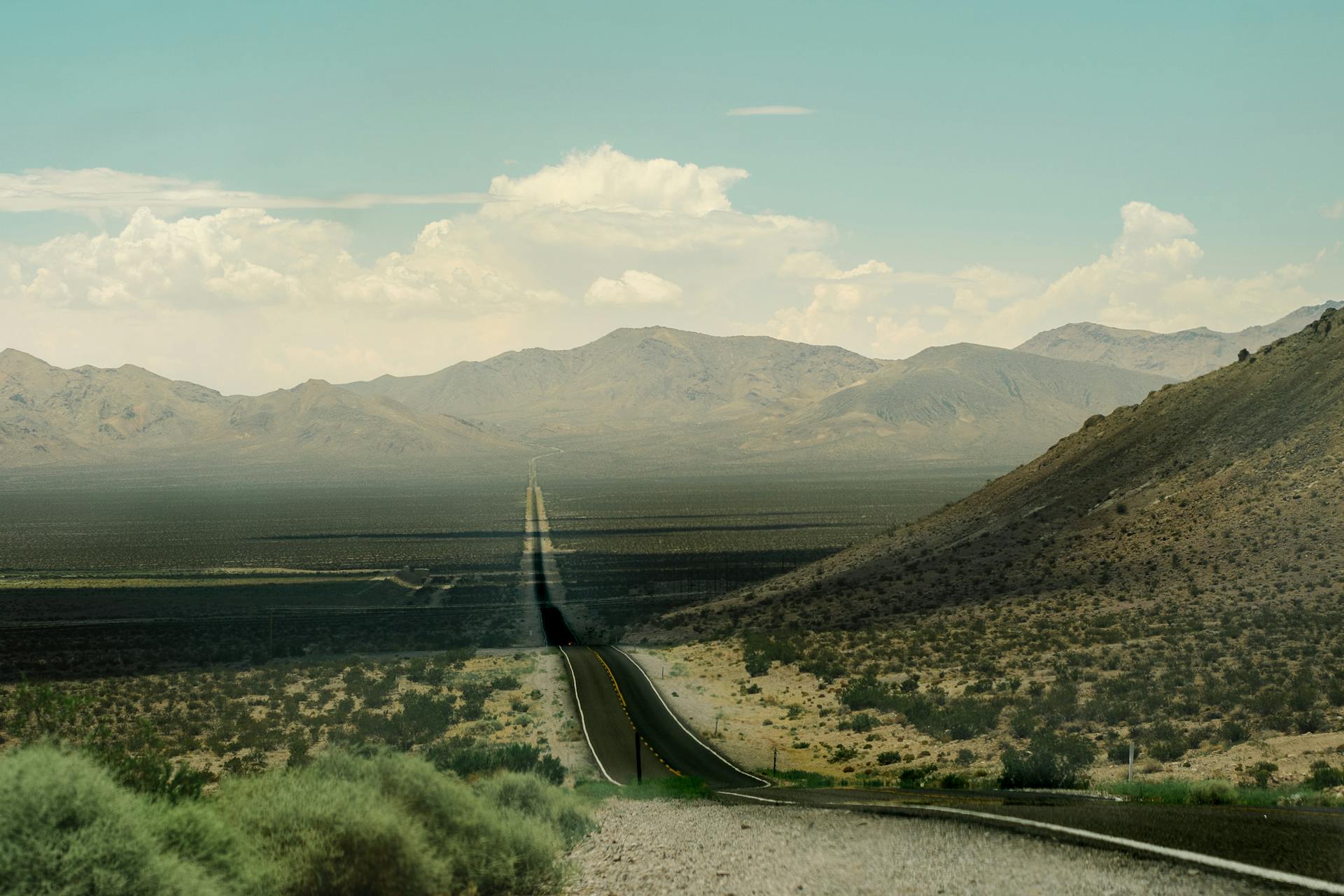
Converting TIFF to JPG produces a far smaller, universally compatible file. The visual stays essentially identical at high quality settings, while the file size drops dramatically because JPG uses efficient lossy compression instead of TIFF's uncompressed storage.
Convert TIFF to JPG Online - Free & Secure
Easily convert your TIFF images to JPG (JPEG) format - right in your browser. TIFF files are the professional standard for printing and archival, but their very large sizes make them impractical for everyday sharing. Converting to JPG gives you a compact, web-friendly file that opens everywhere. If you need the reverse conversion, use our JPG to TIFF converter. For modern web formats with smaller sizes and transparency, try TIFF to WebP. This free TIFF to JPG converter is perfect for designers, photographers, offices, and anyone working with scanned or print images.
⚖️ TIFF vs JPG - Quick Comparison
| Feature | TIFF (Tagged Image File Format) | JPG (Joint Photographic Experts Group) |
|---|---|---|
| Compression | Lossless / uncompressed | Lossy (efficient) |
| File Size | Very large (10-100 MB) | ✓ Much smaller |
| Transparency | ✓ Yes (alpha) | ✗ No (white fill) |
| Web Support | ✗ Not displayed | ✓ Universal |
| Best For | Print, archival, scanning | Photos, web, email, social |
| Color Depth | 8 / 16 / 32-bit | 24-bit |
In practice, TIFF is the better choice when you need maximum quality for professional printing, archival storage, or repeated lossless editing - a single scan can be 50 MB and lose nothing. JPG is the better choice when the image needs to be shared, uploaded, emailed, or displayed on the web, where TIFF simply will not open in a browser. The biggest practical difference is size and compatibility: a 50 MB TIFF can become a 2 MB JPG with no visible quality loss to the human eye. For professionals, the workflow is usually: keep the TIFF master for print, export a JPG for delivery. If your JPGs are still too heavy, run them through an TIFF compressor, or convert to TIFF to WebP for an even smaller modern alternative.
🎯 When to Use JPG
JPG is the go-to format when you need compact, shareable images that open on every device and platform. Here are the most common scenarios where converting TIFF to JPG is the right choice:
Web & Website Images
Browsers cannot display TIFF at all. Converting to JPG produces a web-ready image that loads fast and renders everywhere - essential for blogs, product pages, galleries, and any online content.
Email & Messaging
A 50 MB TIFF will bounce from most inboxes. JPG compresses the same image to a few megabytes, making it easy to attach to email, send over WhatsApp, or share through any messaging app.
Social Media Uploads
Instagram, Facebook, and LinkedIn re-compress everything you upload and reject unsupported formats. A well-sized JPG avoids rejection and gives you control over the final appearance before the platform processes it.
Storage & Bandwidth
When archiving thousands of scanned pages or serving images over limited bandwidth, JPG's dramatically smaller files save storage costs and speed up delivery without noticeable quality loss for most viewing.
If your JPG files need to be even smaller, our TIFF compressor reduces size further without visible loss. For modern web delivery with transparency support, try our TIFF to WebP, or create favicons with the TIFF to ICO converter.
🖨️ When to Keep TIFF Instead
Not every image should leave TIFF. The format remains the professional standard for several critical use cases. Understanding when not to convert helps you protect quality:
Professional Printing
Print shops and publishers expect TIFF because it preserves every pixel at full bit depth with no compression artifacts. For high-end print jobs, billboards, or magazine spreads, keep the TIFF master and only export JPG for proofing.
Long-Term Archival
Museums, libraries, and government archives store images as TIFF precisely because it is lossless and stable for decades. JPG re-compresses on every save, so it is unsuitable for master archival copies.
Repeated Editing
If you will edit, crop, and re-save an image many times, TIFF keeps it pixel-perfect throughout. JPG degrades slightly with every export, so editing workflows should stay in TIFF until the final delivery step.
High Bit-Depth Color
TIFF supports 16-bit and 32-bit color depth for professional color grading and retouching. JPG is limited to 8 bits per channel, so keep TIFF when subtle tonal gradients and color accuracy matter.
Need other professional formats? Convert TIFF to TIFF to PSD for layered Photoshop editing, or to TIFF to RAW for RAW-pipeline compatibility. You can also compress the source first with our TIFF compressor.
💎 Key benefits / Why convert TIFF to JPG
Dramatically Smaller Files
JPG's efficient compression can shrink a 50 MB TIFF to just 1-3 MB with no visible difference. This makes images practical to store, email, and upload without straining bandwidth or inbox limits.
Universal Compatibility
JPG opens on every phone, computer, browser, and app on earth. Unlike TIFF, which needs specialist software, a JPG can be viewed and shared by anyone, anywhere, with zero friction.
Fast Web Performance
Smaller files load faster, improving page speed and SEO. For web publishing, JPG (or TIFF to WebP) is the standard - try our TIFF to WebP for an even more efficient modern format.
Easy Workflow Integration
JPG slots into every CMS, design tool, and social platform. Convert your TIFF masters to JPG for delivery while keeping the originals safe for TIFF compressor or future print use.
⚙️ Features of this tool
- ✓ Convert single or multiple TIFF files at once - batch processing supported
- ✓ Lossless, safe conversion - files never touch any server
-
✓
Canvas-based JPG output via fast browser-native APIs for maximum compatibility - ✓ Adjustable quality slider to balance file size against visual fidelity
- ✓ Batch ZIP download: all converted JPGs bundled into a single archive
- ✓ Handles large multi-megabyte TIFF scans without uploading anything
- ✓ Works on all modern browsers - Chrome, Edge, Firefox, Safari
- ✓ Mobile-friendly: responsive on phones, tablets, and desktops
-
✓
Import via
Computer,URL,Google Drive, orDropbox - ✓ Client-side only: all data stays in your browser. No server uploads, ever
📋 How to use (step-by-step)
-
Select your TIFF files
Click "Select File" or drag files directly into the drop zone. You can also import from
URL,Google Drive, orDropbox. - Choose JPG output Select JPG as your output format and adjust any available options before converting.
- Convert your files Click "Convert" to start. Each file is processed locally in your browser with real-time progress. Conversion takes only seconds.
-
Download your files
Download each JPG individually, or grab everything at once in a single
.ziparchive. - Convert more anytime Process as many TIFF files as you like - there are no limits, no watermarks, and nothing is ever uploaded to a server.
🔧 Technical notes (what to expect)
TIFF can store an alpha channel, but JPG cannot. Any transparent areas in your TIFF will be filled with a solid white background when converted to JPG. If you need to keep transparency, convert to TIFF to WebP instead.
JPG uses lossy compression, so a large TIFF becomes far smaller. At the highest quality setting the difference is invisible; lower settings trade some detail for even smaller files. Choose the quality slider to match your needs.
JPG compression discards some data permanently. For the final web or sharing copy this is fine, but always keep your original TIFF master if you may need to print or edit it later. You can shrink the master with our TIFF compressor.
Very large TIFF scans (up to 100 MB) or big batches may hit browser memory limits. If conversion stalls, process fewer files at once or use a device with more RAM. Everything runs locally with no server-side limit.
💡 Use cases / Examples
Photographers exporting print-ready TIFF scans to lightweight JPG for client galleries, online portfolios, and social media - while keeping the TIFF masters for printing.
Offices and government departments converting scanned TIFF documents to JPG so they can be emailed, embedded in reports, or uploaded to portals that reject TIFF files.
Publishers and designers delivering JPG proofs from high-resolution TIFF artwork for fast review, then returning to the TIFF to PSD or TIFF master for final production.
Anyone who received a giant TIFF and just needs a normal image they can open, view, and share - convert to JPG and you are done in seconds.
🔗 Related Image Tools
This converter is part of our complete image tools suite. Here are the tools most commonly used alongside TIFF to JPG conversion:
Built for Everyone in India
Whether you're printing, publishing, archiving, or just need a quick format swap - this tool is for you.
FAQs - TIFF To JPG Converter
Will converting TIFF to JPG reduce image quality?
▼JPG uses lossy compression, so some data is discarded - but at the highest quality setting the difference is invisible to the human eye, even for detailed photographs. The trade-off is enormous size savings: a 50 MB TIFF can become a 2 MB JPG. For web, email, and sharing this is ideal. If you need a perfect copy for printing or editing, keep your original TIFF master and only use the JPG for delivery.
Why can't my browser open TIFF files directly?
▼TIFF is a professional format designed for print and archival, not for the web. Web browsers do not include built-in TIFF decoders, so the files simply will not display online. Converting to JPG produces a universally supported image that opens in every browser, phone, and app. This is the single most common reason people convert TIFF to JPG - they just need an image they can actually view and share.
Does this tool upload my images to a server?
▼No. All conversion happens entirely in your browser using client-side JavaScript and the HTML5 Canvas API. Your TIFF files never leave your device - they are not uploaded, transmitted, or stored on any server. This keeps your files completely private, and the tool even works offline once the page has loaded. There is zero data collection involved in the conversion process.
What happens to transparency when I convert TIFF to JPG?
▼JPG does not support transparency or alpha channels. If your TIFF contains transparent regions, they will be filled with a solid white background in the JPG output. This is expected behavior for the format. If preserving transparency matters - for logos or overlays - convert your TIFF to PNG or WebP instead, both of which support full alpha transparency.
Can I adjust the JPG quality and file size?
▼Yes. The tool includes a quality slider so you can balance visual fidelity against file size. Higher settings keep more detail at a larger size; lower settings produce smaller files for faster uploads. For most web and sharing uses, a mid-to-high setting gives an excellent result that looks identical to the original while being a fraction of the TIFF size.
Are there limits on file size or number of files?
▼The tool supports TIFF files up to 100 MB each. Since conversion runs in your browser, the practical limit depends on your device's memory and processing power. Very large scans or big batches may slow down on devices with limited RAM. For best results, process large batches in groups of 10-20 files at a time, especially on mobile devices or older computers.
Is JPG good enough for printing?
▼For standard everyday printing - documents, photo prints, office materials - a high-quality JPG is perfectly adequate. For professional commercial printing, magazine production, or large-format work, printers usually prefer the original TIFF because it preserves full detail and color depth with no compression. The rule of thumb: JPG for casual and web use, TIFF for professional print production.
Why is the ZIP download flagged by my browser or Windows?
▼Browsers and Windows SmartScreen sometimes warn about programmatically generated downloads because they are created with JavaScript Blob APIs rather than from a traditional server. The ZIP and its contents are completely safe. If prompted, click "More info" and "Run anyway". Our site uses HTTPS and sanitized filenames to minimize these generic warnings, which do not indicate any real security issue.
Does the converter handle multi-page TIFF files?
▼Many TIFF files contain a single image, but the format can also store multiple pages (common with scanned documents). This tool focuses on converting image content to JPG; for multi-page scanned documents that you want to keep together, converting TIFF to PDF is often the better choice since PDF naturally supports multiple pages in one file.
Will the colors look different after conversion?
▼Minor color shifts can occasionally occur because embedded ICC color profiles from the original TIFF may not transfer during browser-based canvas conversion. Browsers handle color management differently. For most images the difference is imperceptible. If exact color accuracy is critical for professional work, use a desktop application like Photoshop that fully preserves ICC profiles, and keep your TIFF master.
Is the TIFF to JPG conversion really free?
▼Yes, completely free with no limits, no watermarks, no sign-up, and no software to install. You can convert as many TIFF files to JPG as you like, as often as you like. The tool runs entirely in your browser, so there are no server costs to pass on. It is part of our full suite of free, privacy-first image tools at our image hub.
Other Tool Categories
Image Tools
Convert, compress, and resize images in multiple formats - JPG, PNG, WebP, ICO, and more.
Salary Calculators
Calculate in-hand salary, CTC breakup, tax deductions, and more for Indian employees.
Unit Converters
Convert length, weight, temperature, speed, volume, and 200+ measurement units instantly.
Text Tools
Count words, convert case, generate lorem ipsum, find & replace text, and more writing utilities.
Start Converting Images
Convert your TIFF images to JPG format - free, private, and browser-based. No sign-up required.
🚀 Start Converting