WebP To JPG Converter
Convert your WebP images (lossy and lossless) to JPG format.
Drag & Drop WebP files here
or
Import a WebP image directly from a public URL, Google Drive, or Dropbox.
Max file size: 100MB
ℹ️ WebP transparency will be flattened to a white background in JPG output.
Your images are processed securely. No files are uploaded or stored on our servers.
Convert WebP to JPG online without installing any software or struggling with format compatibility. This tool transforms modern, web-optimized WebP images into universally supported JPG (JPEG) files - the format accepted by every device, editor, email client, and social platform. Whether you're sharing photos, uploading to an older CMS, editing in software that doesn't read WebP, or simply need a file that opens everywhere, this free converter handles it instantly in your browser. If you ever need the reverse, our JPG to WebP converter handles that too.
JPG uses efficient lossy compression that keeps file sizes small while maintaining visually excellent quality, making it ideal for photographs, web images, and everyday sharing. Note that WebP transparency is flattened to a white background during conversion, since JPG does not support alpha channels - if you need to keep transparent areas, convert to PNG format instead. If your JPG files are still too large, run them through our JPG compressor afterwards. Simply upload your WebP image, convert it instantly, and download the JPG version in seconds.
Lightning Fast
Convert WebP images in seconds with our optimized engine that runs entirely in your browser - no uploads, no waiting.
Privacy First
No account needed. No data uploaded to servers. Your files stay on your device, processed locally in your browser.
Batch Processing
Convert multiple WebP images at once with a single click. Download results individually or as a ZIP archive.
Pro Quality
Professional-grade output with optimized JPEG compression and adjustable quality controls for the perfect size-to-quality balance.
How It Works
Convert your WebP images to JPG in 4 simple steps. No sign-up required, no software to install.
Upload Your Images
Click to select or drag and drop your WebP files. You can also import from URL, Google Drive, or Dropbox.
Choose Settings
Adjust JPG quality, resolution, and scale settings. Pick a preset size or enter custom dimensions to match your needs.
Convert Instantly
Processing happens entirely in your browser. No uploads, no server-side processing. 100% local and private.
Download Results
Get your converted JPG images individually or download all at once as a ZIP file. Ready in seconds.
Same Image, Universal Format
Our converter keeps your image looking identical. Move your cursor across the image to compare - the visual output stays the same. Only the format and compatibility change.
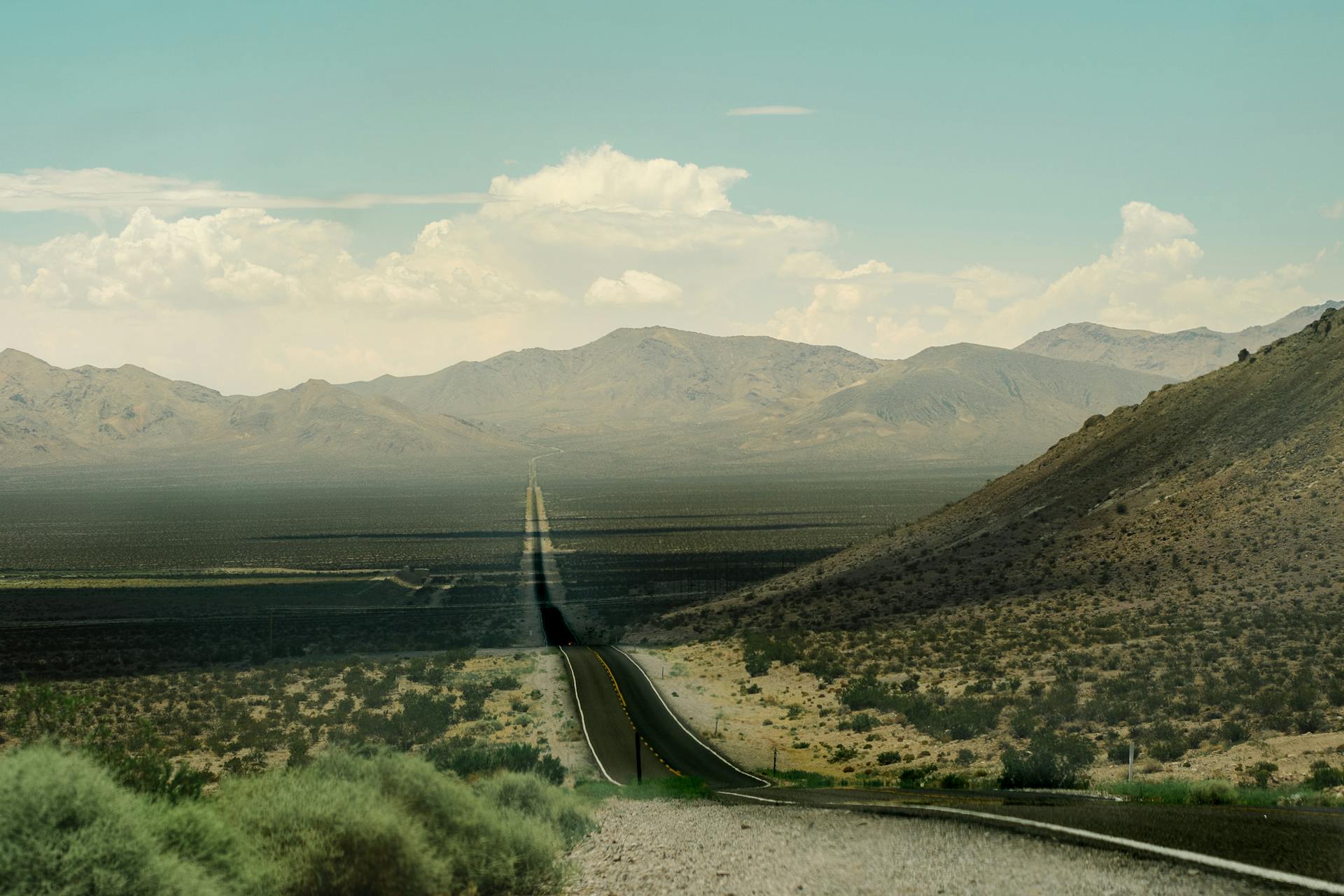
Converting WebP to JPG keeps the image visually the same to the human eye. The file size may increase slightly because WebP uses more advanced compression than JPG, but in exchange you get a format that works in every browser, editor, and device - including older software that cannot open WebP files. Any transparency in the original is flattened to a solid white background, since JPG does not support alpha channels.
Convert WebP to JPG Online - Free & Secure
Easily convert your WebP images to JPG (JPEG) format - right in your browser. WebP is a modern format built for the web, but it isn't supported everywhere. Our tool turns it into a universally compatible JPG that opens on any device, editor, or platform, with optimized compression for small file sizes. If you need to keep transparency, use our WebP to PNG converter instead. Going the other way? Try JPG to WebP. This free WebP to JPG converter is perfect for everyday users, designers, and developers who need files that just work.
⚖️ WebP vs JPG - Quick Comparison
| Feature | WebP | JPG (JPEG) |
|---|---|---|
| Compression | Lossy & Lossless | Lossy |
| Transparency | ✓ Yes (alpha) | ✗ No |
| File Size | Smaller | Slightly larger |
| Compatibility | Modern browsers only | ✓ Universal |
| Editor Support | Limited | ✓ Every editor |
| Best For | Web optimization | Photos, sharing, editing |
In practice, WebP is the better choice when you control the website and want the smallest possible files with full transparency support - it can be 25–35% smaller than an equivalent JPG. JPG is the better choice when you need a file that opens everywhere: older photo editors, email attachments, document software, social uploads, and any platform that rejects WebP. The biggest difference is reach. WebP is only supported by modern browsers and a handful of editors, while JPG has been the universal standard for decades. If you're handed a WebP and something won't open it, converting to JPG solves the problem instantly. For images that need transparent backgrounds, convert to PNG instead, since JPG flattens transparency to white.
🎯 When to Use JPG
JPG is the go-to format when compatibility and ease of sharing matter more than squeezing out the last few kilobytes. Here are the most common scenarios where converting to JPG is the right call:
Photographs & Camera Shots
JPG was designed for photos. Natural images with millions of colors compress beautifully, and every photo editor, printer, and gallery accepts JPG without complaint. It's the safest format for sharing camera images with anyone.
Email & Document Attachments
Many email clients and document tools still don't render WebP inline. Converting to JPG guarantees your image displays correctly in the message body, in Word, PowerPoint, PDFs, and anywhere a recipient might open it.
Marketplaces & Old CMS
Some e-commerce platforms, forums, and older content systems reject WebP uploads entirely. JPG sails through every upload form. If a site won't accept your image, converting to JPG almost always fixes it.
General Sharing & Editing
When you just need a file that works - to send to a friend, drop into a presentation, or open in any app - JPG is the universal answer. It opens on phones, tablets, and decades-old software alike.
Need transparency preserved instead of flattened? Our WebP to PNG converter keeps alpha channels intact. For favicon-specific needs, try the WebP to ICO converter, and for print-ready output see WebP to TIFF.
📷 When to Keep WebP Instead
Not every image needs to leave WebP. The format has real advantages, and understanding when not to convert helps you avoid unnecessary file bloat:
Website Performance
If you control the site and your visitors use modern browsers, WebP delivers the same quality at smaller sizes - meaning faster page loads and better Core Web Vitals scores. Don't convert web assets to JPG unless you need the compatibility.
Transparent Graphics
WebP supports full alpha transparency, just like PNG. If your image has transparent areas - logos, overlays, cutouts - converting to JPG destroys them by filling with white. Keep WebP, or convert to PNG.
Storage & Bandwidth
When you're storing or serving thousands of images, WebP's smaller footprint adds up to meaningful savings. For archival of these files, consider lossless TIFF rather than re-compressing to JPG.
Lossless Originals
Lossless WebP preserves every pixel. Converting it to lossy JPG discards data permanently. If the image will be edited repeatedly, keep a lossless copy or convert to PNG to avoid generation loss.
Need to go the other direction and create WebP files? Our JPG to WebP converter handles that instantly. You can also batch-process and compress WebP images to optimize them further.
💎 Key benefits / Why convert WebP to JPG
Universal Compatibility
JPG opens on every device, browser, and application ever made - from the latest iPhone to decade-old desktop software. Once converted, you never have to worry about whether a recipient can view your image.
Easy Editing
Virtually every image editor reads and writes JPG natively - Photoshop, GIMP, Canva, mobile apps, and built-in OS tools. Converting from WebP removes the friction of dealing with a format some editors still don't support. You can also compress the result afterwards.
Smooth Sharing
Email clients, messaging apps, and social platforms all handle JPG flawlessly. No broken thumbnails, no "unsupported format" errors - just a reliable image that displays correctly everywhere you send it.
Works With Any System
Older CMS platforms, government portals, and legacy enterprise software often reject WebP. JPG is accepted by all of them, making it the safe choice for uploads, forms, and official workflows.
⚙️ Features of this tool
- ✓ Convert single or multiple WebP files at once - batch processing supported
- ✓ Safe, private conversion - files never touch any server
-
✓
Canvas-based JPEG output via fast browser-native APIs for maximum compatibility - ✓ Batch ZIP download: all converted JPGs bundled into a single archive
- ✓ Adjustable quality, resize, and preset options for custom output sizes
- ✓ Transparency automatically flattened to a clean white background
- ✓ Works on all modern browsers - Chrome, Edge, Firefox, Safari
- ✓ Mobile-friendly: responsive on phones, tablets, and desktops
-
✓
Import via
Computer,URL,Google Drive, orDropbox - ✓ Client-side only: all data stays in your browser. No server uploads, ever
📋 How to use (step-by-step)
-
Select your images
Click "Select File" or drag files directly into the drop zone. You can also import from
URL,Google Drive, orDropbox. - Customize conversion Use the Options panel to adjust quality and select a resize mode - choose from percentage, custom size, or preset dimensions like HD or Instagram Square.
- Convert your files Click "Convert Images" to start. Each image is processed locally with real-time progress updates. Conversion takes only seconds.
-
Download your files
Download each JPG individually, or click "Download All (ZIP)" to get everything in a single
.zipfile. - Adjust and redo Changed your mind on settings? Click "Re-convert All" to process every image again with new quality, resize, or preset options - no need to re-upload.
🔧 Technical notes (what to expect)
JPG cannot store transparency. Any transparent areas in your WebP image are filled with a solid white background during conversion. If you need to keep transparency, convert to PNG instead, which fully supports alpha channels.
JPG files are sometimes slightly larger than the original WebP because WebP uses more advanced compression. The difference is usually small and well worth the universal compatibility. If size matters, compress the JPG afterwards or keep the WebP for web use.
JPG uses lossy compression, so converting applies a fresh compression pass. At high quality settings the difference is invisible, but converting an already-compressed WebP to a low-quality JPG can introduce artifacts. Keep quality at 90%+ for best results.
Very large images (up to 100 MB) or batches of many files may hit browser memory limits. If conversion stalls, try fewer files at a time or use a device with more RAM. There's no server-side limit since everything runs locally.
💡 Use cases / Examples
Users who downloaded WebP images from a website and need to open or edit them in software that doesn't support WebP - converting to JPG makes them instantly usable, then compress if needed.
Sellers and marketers uploading product photos to marketplaces or older CMS platforms that reject WebP - JPG passes every upload form. For favicons, also see WebP to ICO.
Anyone emailing or messaging images who wants to guarantee the recipient can view them - JPG renders in every client. For transparent versions instead, use WebP to PNG.
Designers preparing assets for print or documents where JPG is required - convert from WebP, then combine into a PDF or export to TIFF for professional printing.
🔗 Related Image Tools
This converter is part of our complete image tools suite. Here are the most commonly used tools alongside WebP to JPG conversion:
Built for Everyone in India
Whether you're sharing, uploading, editing, or just need a format that works everywhere - this tool is for you.
FAQs - WebP To JPG Converter
Why should I convert WebP to JPG?
▼JPG offers broader compatibility across devices, software, and platforms than WebP. While WebP is excellent for web performance, it is not supported by all photo editors, email clients, older content systems, or marketplaces. Converting to JPG ensures your image opens and displays correctly everywhere, making it easier to edit, email, upload, and share without running into format-related errors or broken previews.
Will converting WebP to JPG reduce image quality?
▼JPG uses lossy compression, so a fresh compression pass is applied during conversion. At high quality settings (90% or above) the difference is invisible to the human eye and perfectly suitable for web, email, and general use. Only at very low quality settings might you notice compression artifacts. For most photographs and everyday images, the quality loss is negligible and the gain in compatibility is well worth it.
Does JPG support transparency like WebP?
▼No. JPG does not support transparency or alpha channels. If your WebP image has transparent areas, they are filled with a solid white background during conversion. This is a hard limitation of the JPG format itself, not the converter. If you need to preserve transparency, convert your WebP image to PNG instead, which fully supports alpha transparency and is just as widely compatible for graphics and logos.
Is this WebP to JPG converter safe to use?
▼Yes, completely. All conversion happens entirely in your browser using client-side JavaScript and the HTML5 Canvas API. Your images never leave your device - they are not uploaded, transmitted, or stored on any server. This means your files remain completely private, and the tool works even without an internet connection once the page has loaded. There is zero data collection involved in the conversion process.
Can I convert multiple WebP images to JPG at once?
▼Yes. The tool supports batch conversion, allowing multiple WebP files to be converted in a single operation. Simply select or drag in all your images at once, choose your settings, and convert them together. You can then download each JPG individually or grab them all bundled into a single ZIP archive, which is convenient when you are processing many files for a project, gallery, or upload.
Why is my JPG file larger than the original WebP?
▼WebP uses a more advanced compression algorithm than JPG, so it can store the same image in fewer bytes. When you convert to JPG, the file may grow slightly because JPG's older compression is less efficient. The increase is usually small and is the trade-off for universal compatibility. If file size is important, you can run the converted JPG through our JPG compressor to shrink it back down without visible quality loss.
Can I convert animated WebP files to JPG?
▼JPG is a static image format and cannot store animation. If you convert an animated WebP, only a single frame (typically the first) is captured as a still JPG image. To preserve motion, convert the animated WebP to GIF instead, which supports frame-based animation. For a single still image from any frame of an animated WebP, this JPG converter works perfectly well.
Will my JPG work on older software and devices?
▼Yes - that is the main reason to convert. JPG has been the universal image standard for decades and is supported by virtually every device, operating system, browser, and application ever made. Whether you are sending the image to someone using old software, uploading to a legacy system, or opening it on a basic phone, a JPG will display without any compatibility issues, unlike WebP which requires modern support.
Does the converter add a watermark to my JPG?
▼No. The converter never adds watermarks, logos, or any branding to your images. The output JPG is a clean, unmarked file containing only your image. There are also no usage limits, no sign-up requirements, and no hidden fees. You can convert as many WebP files as you like, as often as you like, and the results are entirely yours to use however you need.
Can I use this WebP to JPG converter on mobile?
▼Yes. The converter is fully responsive and works smoothly on smartphones, tablets, and desktop computers. The interface adapts to your screen size, and conversion runs locally on your device's browser. On mobile, very large images or big batches may process more slowly depending on your device's memory, but for typical images the tool performs quickly and reliably across all platforms.
What's the difference between JPG and JPEG?
▼There is no difference - JPG and JPEG are the same format. JPEG stands for Joint Photographic Experts Group, the organization that created the standard. The shorter ".jpg" extension dates back to older Windows systems that limited file extensions to three characters, while ".jpeg" is the full form. Both are completely interchangeable, open in the same software, and this converter produces standard JPEG files regardless of which name you use.
Other Tool Categories
Image Tools
Convert, compress, and resize images in multiple formats - JPG, PNG, WebP, ICO, and more.
Salary Calculators
Calculate in-hand salary, CTC breakup, tax deductions, and more for Indian employees.
Unit Converters
Convert length, weight, temperature, speed, volume, and 200+ measurement units instantly.
Text Tools
Count words, convert case, generate lorem ipsum, find & replace text, and more writing utilities.
Start Converting Images
Convert your WebP images to JPG format - free, private, and browser-based. No sign-up required.
🚀 Convert WebP to JPG